
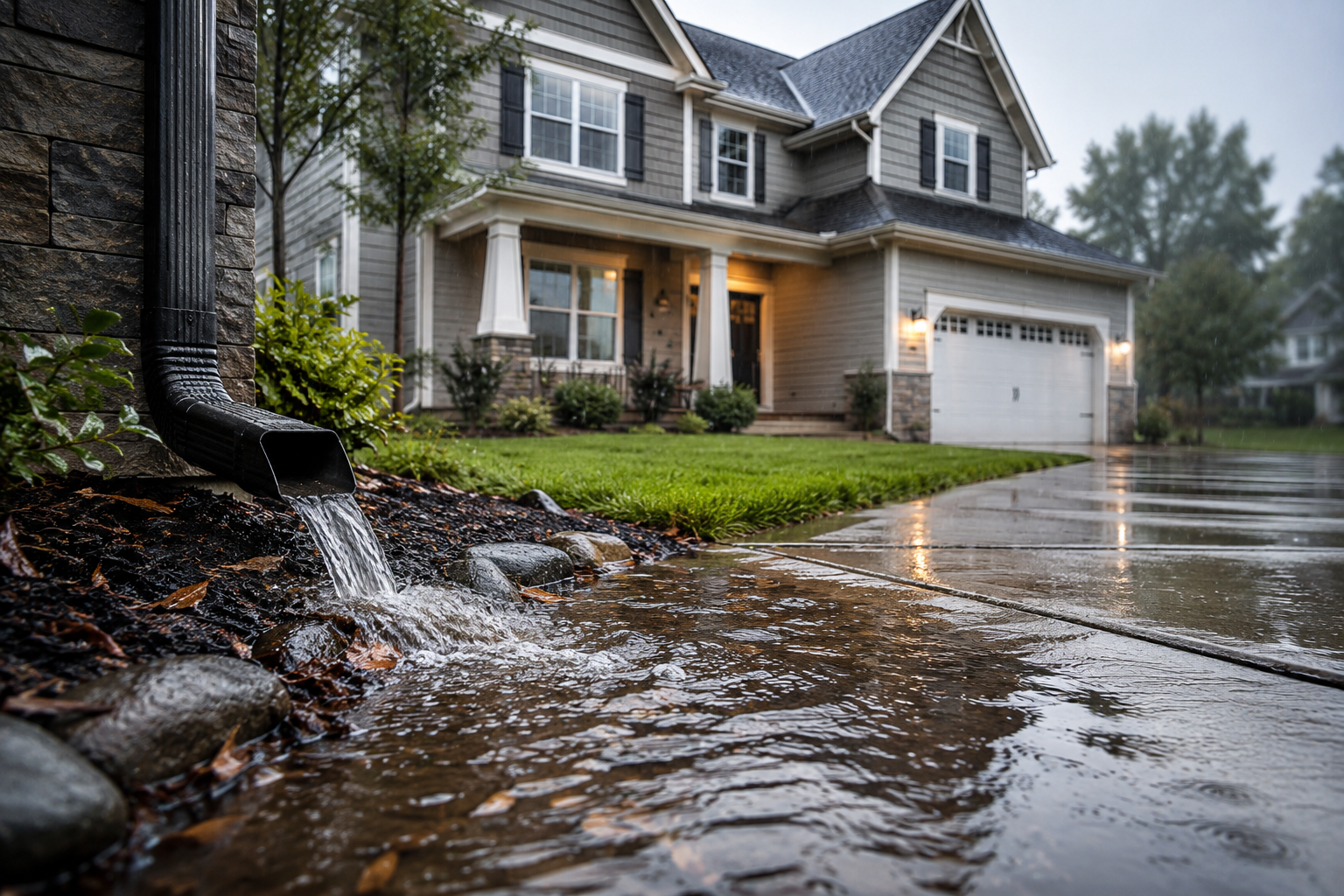
Most buyers hope for blue skies and sunshine when touring homes. Beautiful weather certainly makes a property look its best—but if you’re serious about making a smart investment, one of the best times to look at a house is actually during or just after a good rainstorm.
Rain has a way of revealing things that a sunny day simply can’t.
1. See How the Property Handles Water
Water is one of the biggest enemies of a home. A rainy showing allows you to observe things that would otherwise be impossible to see.
Pay attention to:
- Is water pooling near the foundation?
- Are gutters overflowing?
- Do downspouts carry water away from the home?
- Are there soggy spots in the yard that may indicate drainage issues?
- Is the driveway collecting standing water?
Minor drainage improvements are common, but significant water problems can become expensive repairs.
2. Check the Roof in Real Time
While you shouldn’t climb onto a roof, rain can provide valuable clues.
Look for:
- Water pouring over gutters instead of through them
- Missing or damaged gutters
- Water stains on ceilings or around skylights
- Active drips in garages, porches, or unfinished spaces
A roof may look perfectly fine from the ground on a sunny day, but rain quickly exposes weak spots.
3. Evaluate the Basement or Crawl Space
If the home has a basement or crawl space, don’t skip it.
During wet weather, look for:
- Damp walls
- Standing water
- Musty odors
- White mineral deposits (efflorescence)
- Signs of previous water intrusion
Even if the area appears dry, fresh water marks or recently running dehumidifiers may prompt additional questions during inspections.
4. Experience the Neighborhood
Rain also tells you a lot about the neighborhood.
Ask yourself:
- Do roads flood?
- Does water drain properly along the streets?
- Are sidewalks usable?
- Is traffic noticeably worse during storms?
A neighborhood that functions well during bad weather will likely be more enjoyable year-round.
5. Listen to the Home
Rain creates an opportunity to notice things you might otherwise miss.
Can you hear:
- Excessive road noise?
- Water dripping inside walls?
- Loud HVAC equipment?
- Poorly insulated windows rattling in the wind?
These details often become much more obvious during inclement weather.
6. Test the Exterior
Take a close look at:
- Decks becoming slippery
- Walkways that puddle
- Exterior lighting on cloudy days
- Patio drainage
- Retaining walls handling runoff
If you plan to spend time outdoors, you’ll want to know how the property performs after a storm.
7. Think Beyond Curb Appeal
Every home looks inviting on a perfect spring afternoon. Rain forces you to evaluate the home’s construction rather than its landscaping.
Fresh mulch, blooming flowers, and bright sunshine can make almost any property look appealing. Rain shifts the focus to what really matters—the systems that protect your investment.
Remember: Rain Doesn’t Mean “Don’t Buy”
Finding water issues doesn’t automatically mean you should walk away. Many drainage concerns are relatively inexpensive to correct. The important thing is identifying them before closing so you can make an informed decision, negotiate repairs or credits when appropriate, and avoid unexpected surprises after moving in.
A thorough home inspection is still essential, but seeing a home perform during real weather conditions gives buyers information that no inspection report can fully replicate.
The Bottom Line
If there’s rain in the forecast, don’t automatically reschedule your showing. Grab an umbrella and go.
You may not get the prettiest photos, but you’ll get something even more valuable—a clearer picture of how the home performs when Mother Nature puts it to the test.
At Southern Oaks Realty, we believe buying a home isn’t just about finding one you love—it’s about finding one you can feel confident in for years to come. Sometimes, the best showing is the one that happens in the rain.
Leave a Reply